Question:
I got a list of what they say is wrong with my eyes. Which programs do I use? one assistant said the Red Light is not good for the eyes. Can you address that as well please?
Here is the list of issues:
Hypermetropia, bilateral
Regular astigmatism, bilateral
Presbyopia
Puckering of macula, bilateral
Macular cyst, hole, or pseudohole, left eye
Age-related nuclear cataract, bilateral
Cortical age-related cataract, bilateral
Answer:
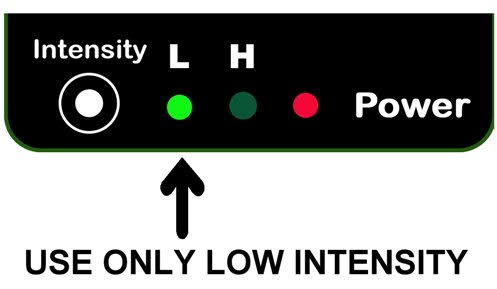
Use the machine on Low Intensity for most everything. This is showing us better results.
While macular hole is distinct from age-related macular degeneration (AMD), both conditions can affect the macula and lead to central vision loss. AMD primarily involves the deterioration of the macular cells over time, leading to gradual vision loss, whereas macular hole is characterized by a focal defect in the macular tissue. However, individuals with macular hole may also have underlying risk factors for AMD, such as aging and genetic predisposition.
Group 1 controller: MACULAR was suggested for a number of the eye issues
All Cataracts and related :
Standalone controller (Program #3)
was suggested for a number of the eye issues
Every program on the Controller is designed with a specific therapeutic purpose, utilizing targeted frequency bandwidths to support healing and remission. As long as the red light is illuminated, the frequencies are active and exerting effects. While the impact may vary depending on each individual frequency, this non-invasive and supportive therapy is especially beneficial for addressing specific health conditions.
I suppose its a Lab Assistant’s point of view vs some of the very best eye doctors in the world, who have printed papers on the success of Red Light Eye Therapy
The research papers incorporated into the development of the Retyne Invisible Infrared Mat were drawn from the following scholarly sources, alongside additional in-house research documentation.
This is only 17 scholarly sources, i couldn’t find the file with around 15 further studies.
[1] Neurobiol Aging. 2017 Apr; 52: 66–70. Aging retinal function is improved by near infrared light (670 nm) that is associated with corrected mitochondrial decline
[2] Kokkinopoulos I, Colman A, et al. Age-related retinal inflammation is reduced by 670 nm light via increased mitochondrial membrane potential. Neurobiology of Aging. 2013 Feb.
[3] Koev K, Avramov L, et al. Five-year follow-up of low-level laser therapy (LLLT) in patients with age-related Macular degeneration. Journal of Physics. 2018.
[4] Calaza KC, Kam JH, et al. Mitochondrial decline precedes phenotype development in the complement factor H mouse model of retinal degeneration but can be corrected by near infrared light. Neurobiology of Aging. 2015 Jun.
[5] Sivapathasuntharam C, Sivaprasad S, et al. Aging retinal function is improved by near infrared light (670 nm) that is associated with corrected mitochondrial decline.Neurobiology of Aging. 2017 Apr.
[6] Gopalakrishnan, S. Photobiomodulation in Inherited Retinal Degeneration. 2012. Theses and Dissertations. 4.
[7] BrightFocus Foundation
[8] Núñez-Álvarez C, Del Olmo-Aguado S, et al. Near infra-red light attenuates corneal endothelial cell dysfunction in situ and in vitro. Experimental eye Research. 2017 jun.
[9] Del Olmo-Aguado S, Núñez-Álvarez C, et al. Red light of the visual spectrum attenuates cell death in culture and retinal ganglion cell death in situ. Acta Ophthalmologica 2019 Feb.
[10] Osborne NN, Núñez-Álvarez C, et al. European Journal of Pharmacology. Glaucoma: Focus on mitochondria in relation to pathogenesis and neuroprotection. 2016 Sep.
[11] Beirne K, Rozanowska M, et al. Red Light Treatment in an Axotomy Model of Neurodegeneration. Photochemistry and Photobiology. 2016 Jul.
[12] Fitzgerald M, Bartlett CA, et al. Near infrared light reduces oxidative stress and preserves function in CNS tissue vulnerable to secondary degeneration following partial transection of the optic nerve. Journal of Neurotrauma. 2010 Nov.
[13] So KF, Leung MC. Effects of low level laser treatment on the survival of axotomized retinal ganglion cells in adult Hamsters. Neural Regeneration Research. 2014 Nov.
[14] Szymanski CR, Chiha W, et al. Paranode Abnormalities and Oxidative Stress in Optic Nerve Vulnerable to Secondary Degeneration: Modulation by 670 nm Light Treatment. 2013 June.
[15] Rezaei Kanavi M, Tabeie F, et al. Short-term effects of extremely low-frequency pulsed electromagnetic field and pulsed low-level laser therapy on rabbit model of corneal alkali burn. Experimental Eye Research. 2016 Apr.
[16] Koev K, Avramov L, Borisova E. He-Ne low level laser therapeutic applications for treatment of corneal trauma. 16th International School on Quantum Electronics and Applications. 2011 Jan.
[17] Xu QH, Zhao C, et al. Helium-neon laser therapy in the treatment of hydroxyapatite orbital implant exposure: A superior option. Experimental and Therapeutic Medicine. 2015 Jun.